
Real User Monitoring
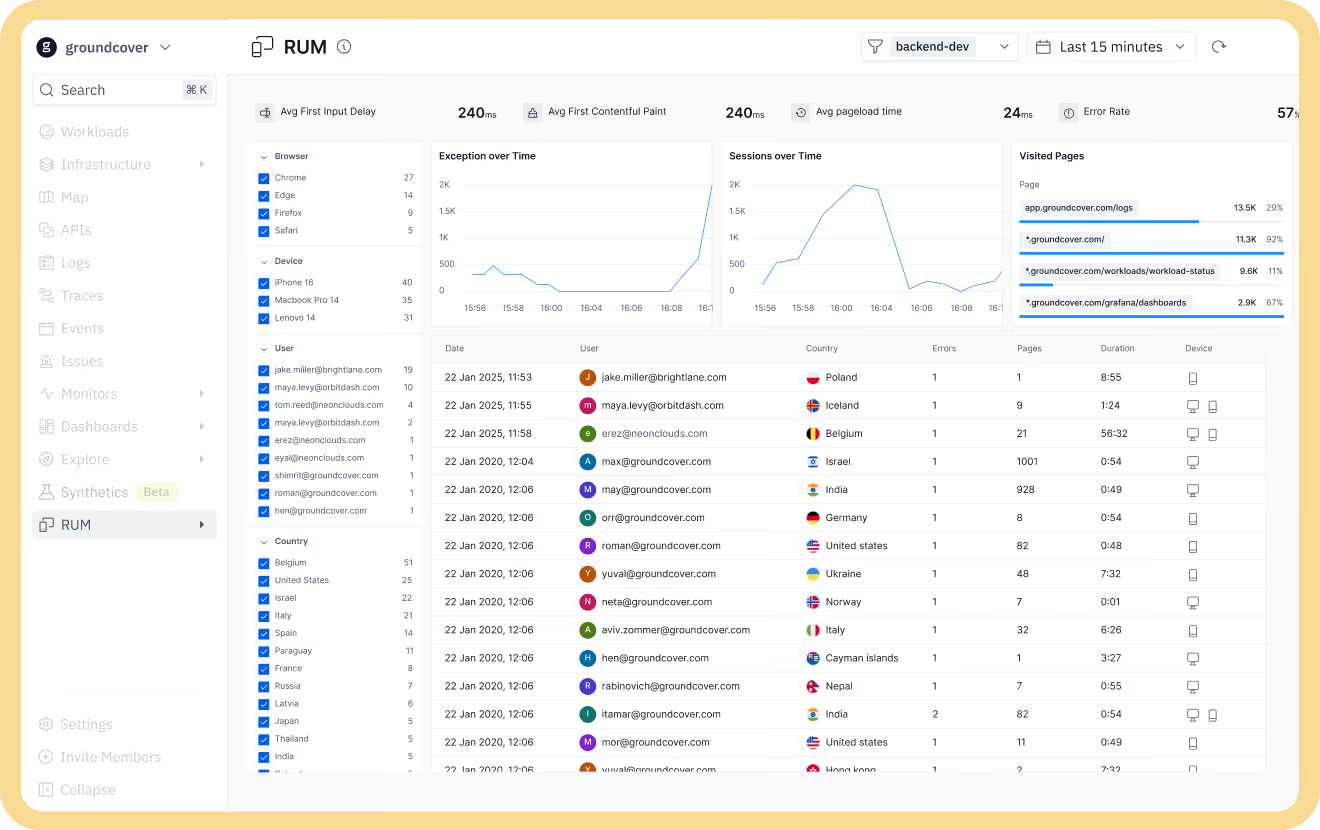
Ensure smooth user experiences with frontend insights. Monitor errors and performance from browser to backend, all while keeping user data private.


Unified full-stack observability
Bring user experience data into the same platform as metrics, logs, & traces from backend services, for a seamless, end-to-end view.

Rapid frontend issue resolution
Enable immediate visibility into frontend errors, user interactions, and performance bottlenecks, reducing debugging time and resolving faster.

Secure, privacy-first deployment
Get frontend observability without sending sensitive user data to a third-party, ensuring compliance, security, & full control over your data.
The only byoc frontend monitoring solution
- Keep sensitive user data, such as page URLs and user IDs, safe and secured inside your four walls.
- Remove all costs associated with streaming & storing data with third-party providers.
- Ensure compliance with the stringiest data privacy rules and regulations.
Faster debugging and issue resolution
- Chase problems in either direction, from a user session down to the backend trace that caused it, or from a backend anomaly up to the user who triggered it.
- Every user click, network request, and error is automatically linked to its backend trace, so you can follow issues across the entire stack without switching tools.
- Resolve frontend problems faster with shared context across logs, traces, and user sessions, all in one place.
Real-time performance insights and session replays
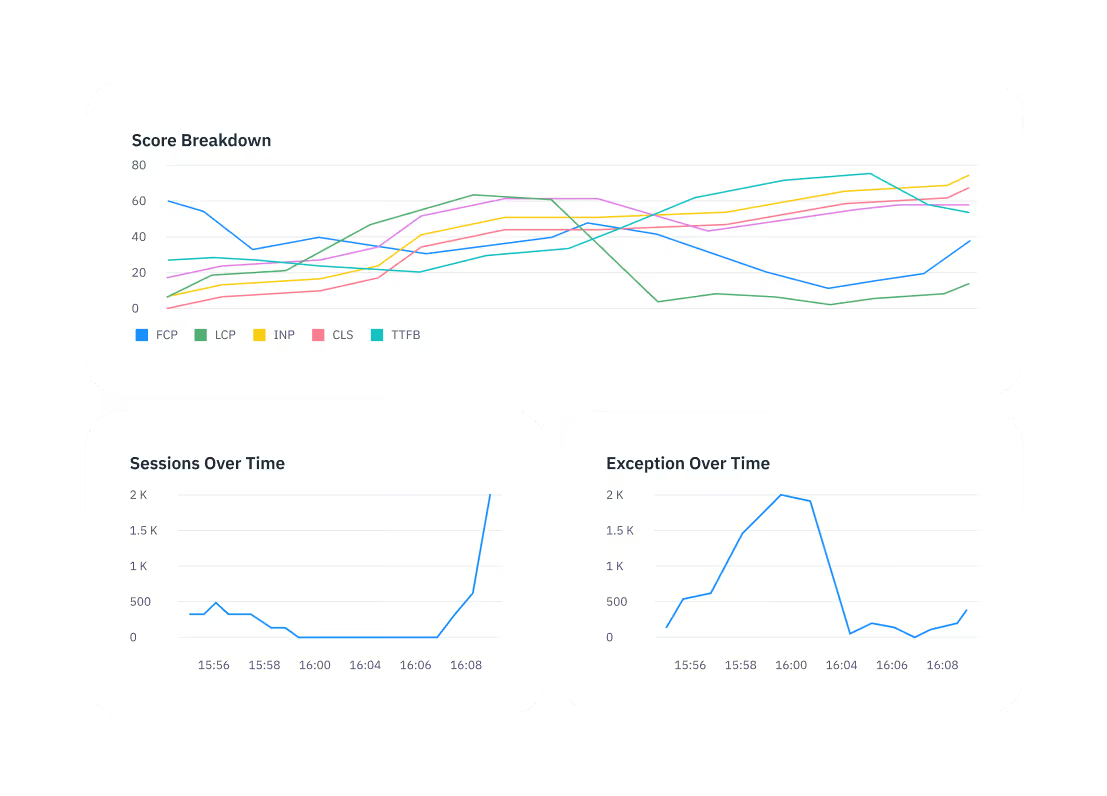
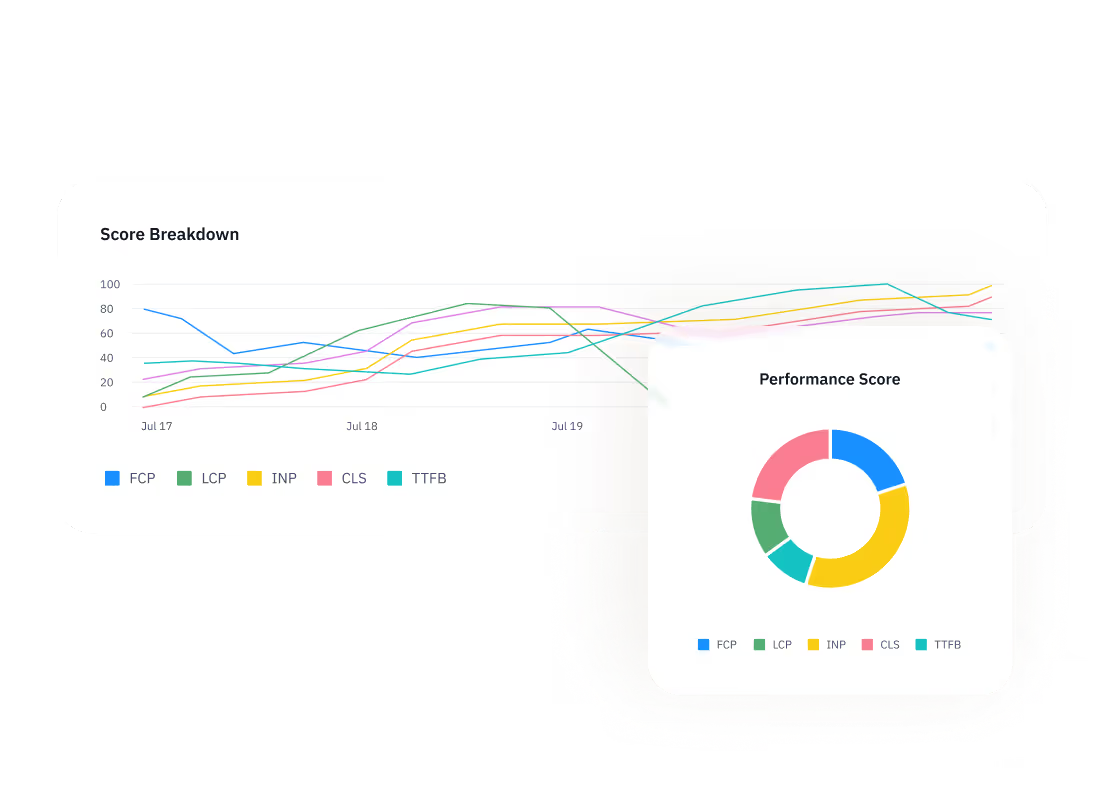
- Know exactly how your app feels to real users by tracking Core Web Vitals like load time, responsiveness, and visual stability across every browser, device, and region.
- Pinpoint user-specific slowdowns by browser, device, and region before users start reporting them.
- Set monitors on any performance metric so you get alerted the moment something degrades.
Investigate any session, down to the last click
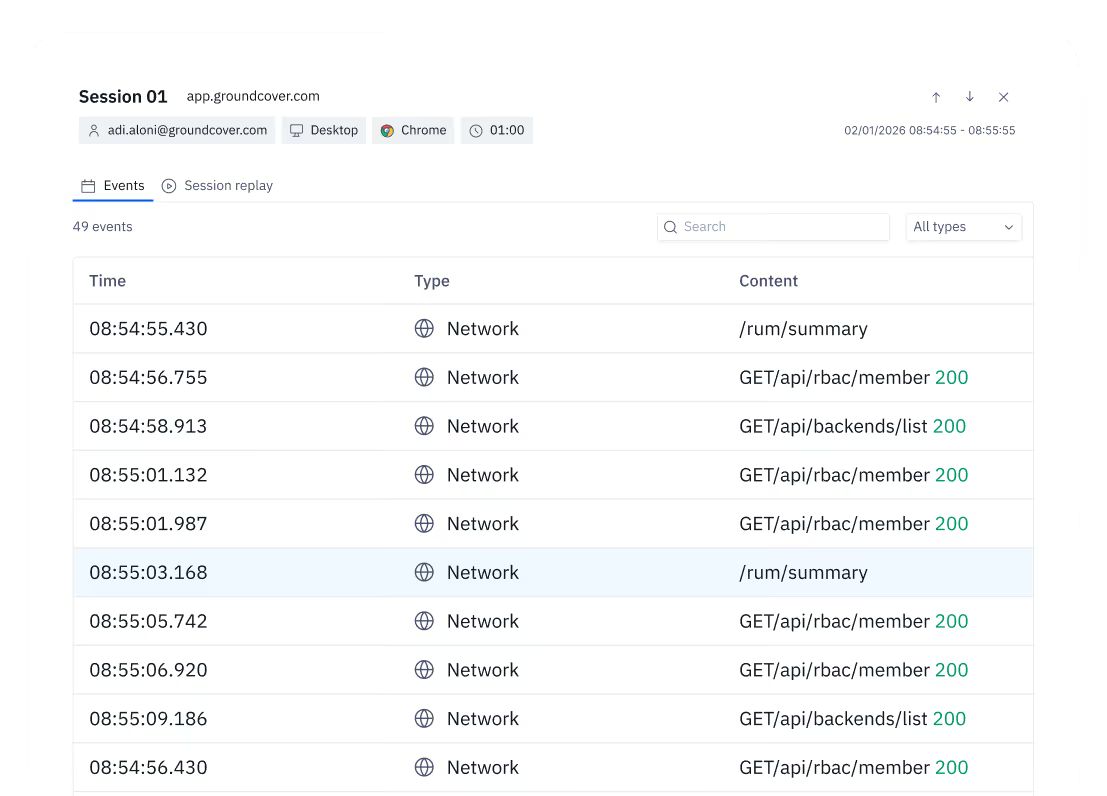
- The Sessions Explorer gives every engineer and product manager a complete view of what users did, what broke, and why, without digging through logs.
- Filter and search every user session in one view, and jump straight to the ones that ended in an error, a drop-off, or a slowdown.
- Watch a replay of the session right alongside the event timeline, so you see both what the user experienced and what the system reported at each step.
The first rum solution that keeps all your user data 100% in-house
- groundcover’s BYOC architecture keeps all your data within your environment
- Easier to comply with data privacy regulations such as GDPR, DPA, and CCPA
- Eliminate costs related to streaming of frontend data to third-party providers
Real User Monitoring FAQs
Everything you need to know about groundcover Real User Monitoring
Real-User Monitoring requires a groundcover inCloud setup. It is therefore only available to our Enterprise customers. Check out our pricing page for more information.
One of the biggest advantages of using groundcover for RUM is keeping sensitive user data in-house. Real User Monitoring data is often rich with user details - page URLs, user IDs or emails, behavior patterns, maybe even form inputs. SaaS monitoring tools require, by definition, that all that data gets sent to a third-party cloud. However, groundcover’s BYOC architecture means we run in your environment, so your RUM data - just like all other backend data such as logs, traces, and metrics - never leaves your infrastructure.
We built a custom JavaScript SDK specifically for capturing frontend data. You simply add it to your web app, and it will automatically instrument the app to collect all relevant events and metrics. Once collected in the browser, RUM data is sent to your groundcover BYOC backend where it flows into the existing observability data pipeline, feeding it into the same storage and analysis systems that already hold your logs, traces, and metrics.
In short, adding frontend observability means you’re no longer flying blind on the client side. You have concrete data on what users see and do. This bridges the traditional gap between frontend developers, DevOps engineers, and SREs – everyone gets a shared view of the entire stack, client to server. When an incident occurs, you can now answer “was it the frontend or the backend?” with confidence and solve problems faster.
Explore More groundcover products
Discover additional groundcover capabilities that work seamlessly with Synthetics.

Integrations
Connect groundcover to your existing stack, from cloud providers to alerting tools, with out-of-the-box integrations and zero custom pipelines.
Application Performance Monitoring
Gain end-to-end visibility into application performance. Identify and resolve issues instantly with zero code changes.
Migration
Move from your existing observability stack to groundcover without friction, with guided migration paths and full coverage from day one.
Observability
for what comes next.
Start in minutes. No migrations. No data leaving your infrastructure. No surprises on the bill.













.svg)